Crash
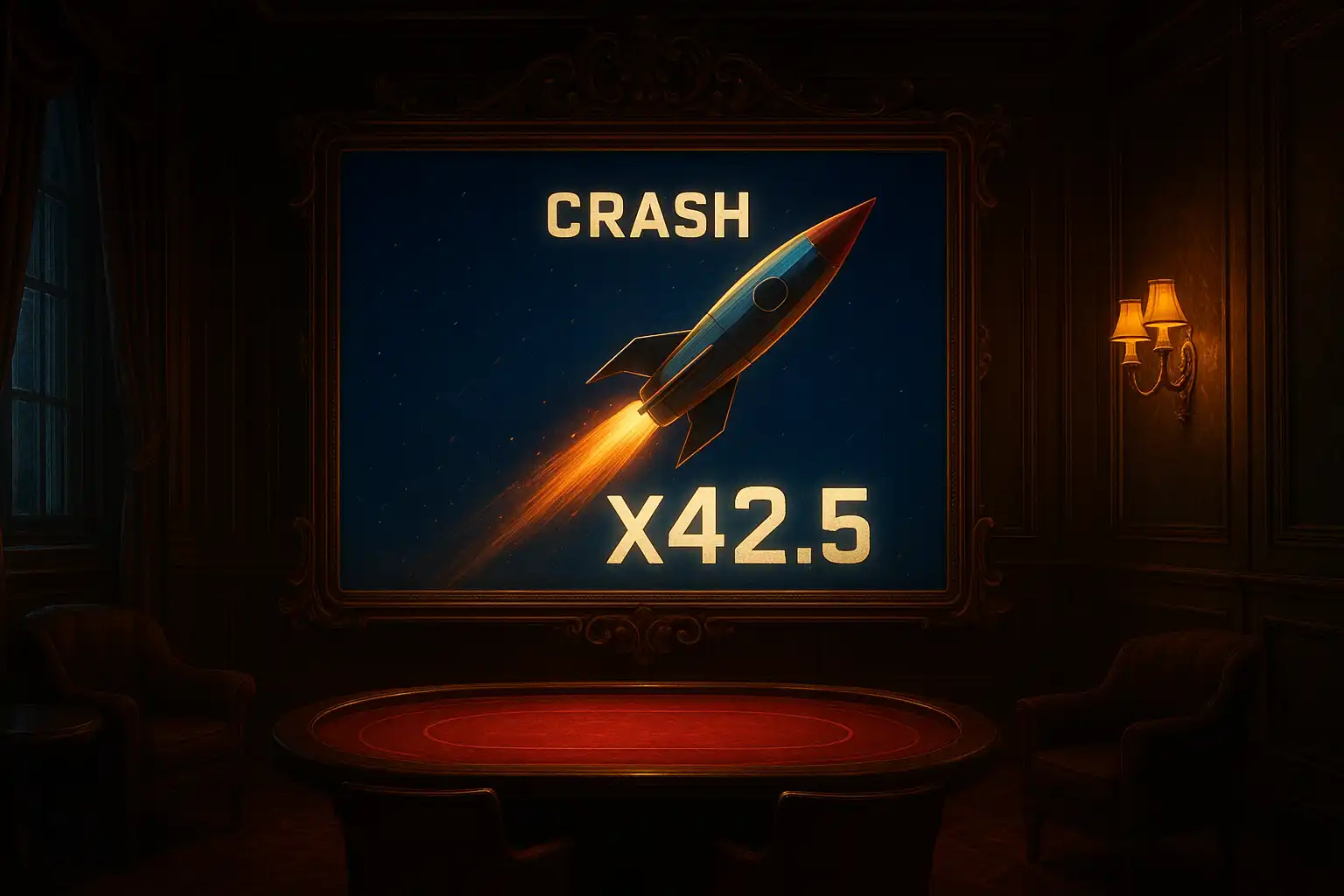
Tucked between the slot floor and the live tables, BetBluff Manor Estate’s crash game has become one of the estate’s most-played titles for punters who fancy a faster pace than a standard reel spin allows. This page breaks down how the multiplier engine works, how a session might be approached, and where crash sits within the wider bonus terms.
How the Game Works
Crash is built around a single climbing multiplier that starts at 1.00x and rises for as long as the round continues, before crashing at a random point determined by a provably fair algorithm. A punter places a stake before the round begins, then decides at what point to cash out, banking whatever the multiplier reads at that moment. Wait too long and the round crashes before the cash-out button is pressed, and the stake is lost entirely. Cash out too early and a smaller profit is locked in than might otherwise have been possible. That tension, between greed and patience, is the entire game in a nutshell.
Rounds typically run for anywhere between one and thirty seconds, though the multiplier can occasionally run considerably higher before crashing, with historical highs on the estate’s title climbing past 1000x on rare occasions. The crash point for each round is generated using a cryptographic hash published before the round starts, meaning punters can verify after the fact that the result wasn’t altered once stakes were placed, a feature commonly referred to as “provably fair”.
The visual presentation leans on the manor theme just as heavily as the rest of the site, with the climbing multiplier rendered as a rocket lifting past rows of portrait frames rather than the plain rising line seen on some competitor titles. It’s a small touch, but it keeps crash feeling of a piece with the rest of the estate rather than a bolted-on arcade game, which is a trap plenty of themed casinos fall into once they step outside their core slot library.
Placing a Bet
- Select a stake using the bet panel, with a minimum of £0.10 and a maximum of £500 per round at the estate.
- Optionally set an auto cash-out multiplier, which will bank winnings automatically once the multiplier reaches that figure without requiring a manual click.
- Watch the multiplier climb once the round begins, either alongside a live chat feed of other punters’ cash-outs or in a quieter solo view.
- Cash out manually at any point before the crash, or let the auto cash-out setting handle it.
Many crash titles, including this one, allow two simultaneous bets per round, letting a punter run one conservative auto cash-out alongside a second, riskier manual bet chasing a bigger multiplier.
Strategy Notes
There’s no way to predict a crash point in advance since each round is independently randomised, but punters do commonly settle into one of a few broad approaches:
- Low and steady: setting an auto cash-out around 1.2x to 1.5x banks small, frequent wins and suits a punter more interested in stretching a session than chasing a big multiplier.
- Split betting: running a low auto cash-out on one stake and a manual, higher-risk bet on a second, balancing consistency against the chance of a bigger payout.
- Trend watching: some punters track recent crash points on the live feed, on the logic that a run of low multipliers is “due” a high one, though it’s worth noting the game has no memory and each round is entirely independent of the last.
None of these approaches change the underlying house edge, they simply shape how quickly a bankroll might rise or fall.
A related habit worth flagging is chasing losses by increasing stake size after a crash round goes badly, on the theory that a bigger bet will recover the difference faster. This is a common trap across fast-paced games generally, not just crash, and it tends to accelerate losses rather than recover them, since stake size has no bearing on where the next crash point falls. Setting a fixed stake and a session loss limit before play begins is a more reliable way to keep a crash session enjoyable rather than stressful.
House Edge and RTP
BetBluff Manor Estate’s crash title runs a return-to-player figure of 97%, in line with the wider crash game market, giving a house edge of 3%. This is calculated across the full range of possible outcomes rather than any single round, so short sessions can and do swing well outside that average in either direction.
| Metric | Figure |
|---|---|
| RTP | 97% |
| House Edge | 3% |
| Min Stake | £0.10 |
| Max Stake | £500 |
| Max Multiplier | Uncapped |
Crash and the Welcome Bonus
Crash games generally contribute at a reduced rate towards clearing a deposit bonus compared with standard slots, and BetBluff Manor Estate is no exception, crash contributes 20% towards the 35x wagering requirement attached to the 250% welcome offer. Punters looking to clear a bonus quickly are usually better served spinning slots, which contribute in full, and treating crash as a separate pursuit once wagering requirements are already settled, or when playing with cash balance rather than bonus funds.
Responsible Play on Fast Games
The rapid pace of crash rounds, often over within a matter of seconds, means losses can accumulate quickly if a punter isn’t tracking their stake size carefully. The estate’s deposit limits and loss limits apply equally to crash as to any other game, and a session timer can be set from account settings to prompt a break after a chosen period. Given how quickly rounds repeat, crash is worth approaching with a firm stake plan set before play begins rather than decided round by round in the moment. Anyone finding it hard to stop after a losing run is encouraged to reach out to the estate’s support desk, which can apply a cooling-off period or a full self-exclusion at a punter’s request, no questions asked and no charge attached.